
Why Is My Water Bill So High? A Northwest Georgia Plumber Explains the 7 Most Common Causes
A sudden spike in your water bill almost always means something is wrong — not something you did. Here's how to find it, what it costs to fix, and when to call a plumber.
You Didn't Use More Water. Something Is Wrong.
It's one of the most common calls we get in Bartow, Cherokee, and Cobb counties. A homeowner opens their water bill, sees a number that's 40%, 60%, sometimes double what it normally is — and they have no idea why. Nobody left a hose running. Nobody filled a pool. The bill is just higher.
In almost every case, the cause is a leak or a plumbing issue somewhere in the home — and most of them are silent. You won't hear them. You won't see them. But your water meter will catch every drop, and Cherokee EMC and Cartersville's utility department will charge you for every gallon.
The good news: most of these problems are fixable, and catching them early is significantly cheaper than letting them run. Here are the seven causes we see most often on high-bill service calls in Northwest Georgia.
A Running Toilet
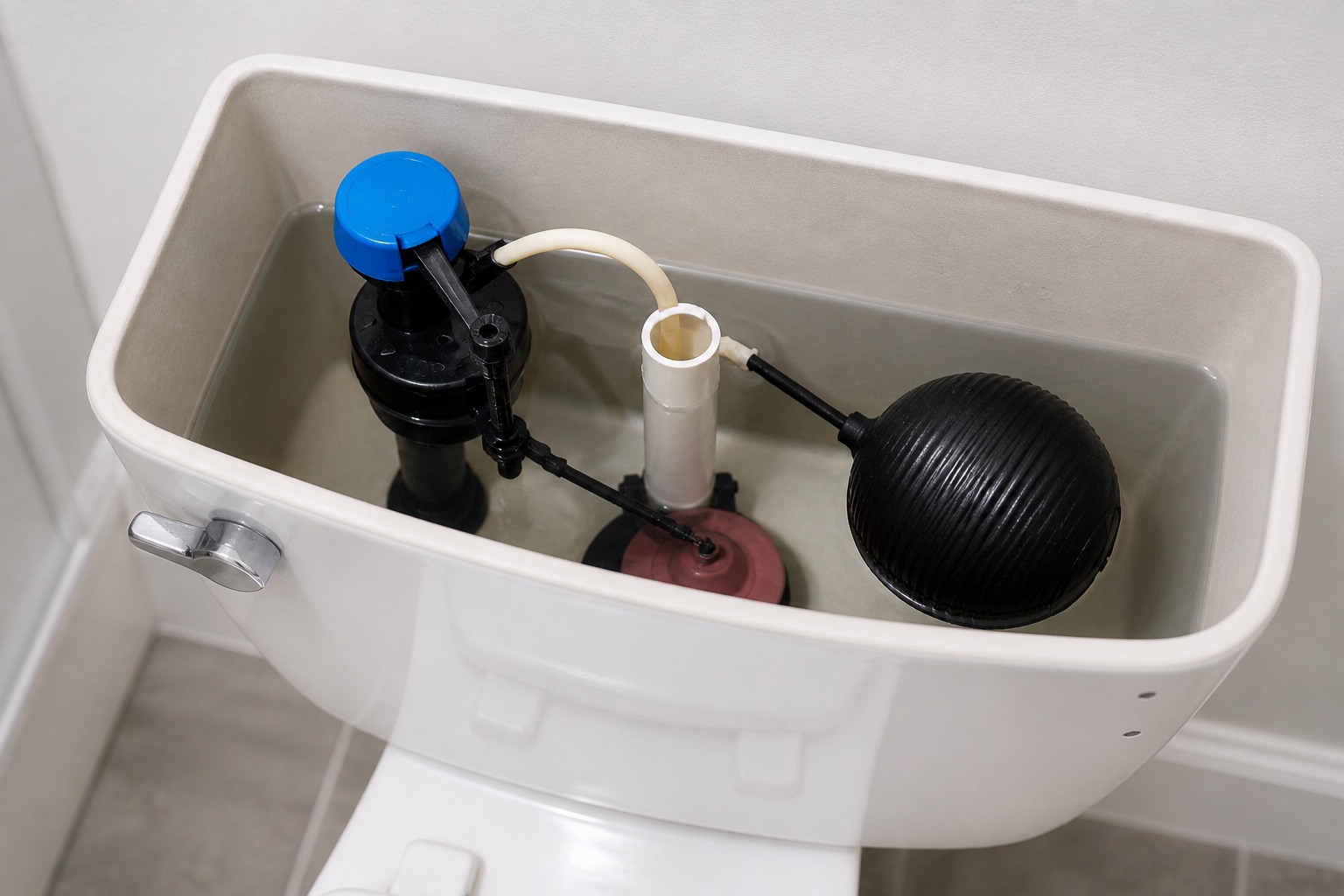
A toilet that runs continuously — even silently — can waste between 200 and 1,000 gallons of water per day. That's not a typo. A faulty flapper, a worn fill valve, or a float set too high can let water trickle from the tank into the bowl 24 hours a day without making a sound you'd notice from the hallway.
The test is simple: put a few drops of food coloring in the tank and don't flush. If color appears in the bowl within 15 minutes, your flapper is leaking.
A Slab or Underground Water Line Leak
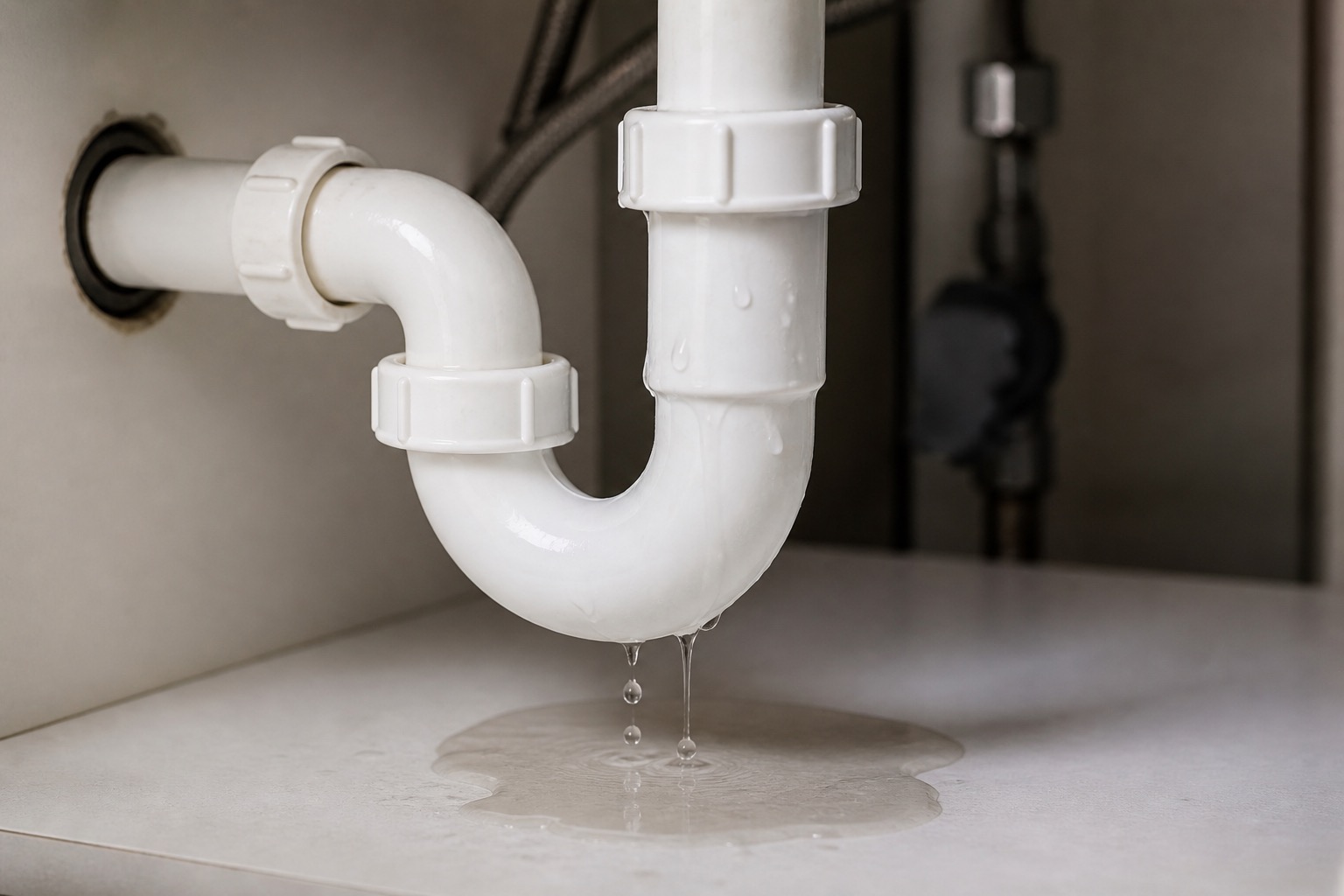
Even a slow drip under a sink or behind a wall adds up to thousands of gallons monthly.
This is the one that scares homeowners most — and for good reason. Water lines that run under or through your home's concrete slab can develop pinhole leaks from corrosion, shifting soil, or pipe friction. The water has nowhere to go but into the ground beneath your foundation, or up through the slab itself.
Signs include warm spots on your floor, the sound of running water when everything is off, unexplained wet areas in your yard, or cracks developing in your flooring or walls. In Cherokee and Bartow counties, we see slab leaks most often in homes built in the 1980s and 1990s with copper pipe that has aged past its lifespan.
A licensed plumber can perform a pressure test and isolate sections of your plumbing to determine where the failure is before recommending a repair approach — spot repair or full rerouting.
By the time a homeowner notices warm spots on the floor or sees their bill double, a slab leak has often been running for weeks. The sooner you call a plumber, the less damage you're dealing with.
Dripping Faucets and Fixture Leaks
A faucet that drips once per second wastes more than 3,000 gallons per year. Most homeowners tune out a slow drip — it becomes background noise. But your utility meter doesn't ignore it. Kitchen faucets, bathroom faucets, outdoor hose bibs, and shower valves all develop worn washers and O-rings over time, especially in homes with hard water from well systems common in rural Bartow and Cherokee counties.
Outdoor hose bibs are particularly easy to overlook. A slow drip at an outdoor faucet can run all season before anyone notices. We find them on nearly every general plumbing inspection we do.
A Failing Water Heater
Your water heater has a temperature and pressure relief valve (T&P valve) designed to release water if pressure or temperature gets too high. When this valve starts to fail, it can discharge water continuously — often into a floor drain where you'd never see it — or the valve may stick open and drip constantly.
A leaking water heater tank itself is another culprit. Small weeps around the base, connections, or supply lines can add up to significant water loss before the tank visibly fails. If your water heater is over 10 years old and your bill is climbing, it deserves a look.
A Leaking Main Water Line
The main water line runs from the meter at the street to your home. If this line develops a crack, joint failure, or root intrusion, water escapes into the soil before it ever reaches your fixtures — but the meter still measures every gallon. This is one of the harder leaks to catch because the evidence may be subtle: a soft, wet spot in your yard, greener grass in one area, or slight erosion along the line's path.
In Northwest Georgia's clay-heavy soils, soil movement and tree root growth are common causes of main line damage. If you have large trees between your meter and your house, this is worth investigating when your bill climbs unexpectedly.
Irrigation System Leaks
Supply line connections at appliances and fixtures are a common source of slow, undetected leaks.
Spring is when we see a surge of high water bill calls in Bartow and Cherokee counties — and irrigation systems coming back online after winter are usually involved. A cracked head, a stuck valve, or a broken lateral line can run hundreds of gallons every time the system cycles, often at 3am when nobody is watching.
If your bill jumped in March, April, or May and you have an irrigation system, shut the system off at the controller and watch your meter for 30 minutes with no water running inside. If the meter is still moving, you have a supply-side leak or a stuck valve that's running continuously.
Leaking Appliance Supply Lines
The braided supply lines behind your refrigerator, washing machine, and dishwasher are often out of sight and out of mind — until they fail. Older plastic supply lines in particular can develop slow weeps or sudden bursts, especially as homes age. We regularly find slow drips behind refrigerators that have been quietly soaking into the subfloor for months.
Washing machine supply hoses are one of the most common sources of catastrophic water damage in homes. If yours are the original rubber hoses that came with the machine, and they're more than 5 years old, replacing them with stainless braided hoses is cheap insurance.
The Meter Test — Do This Before You Call Anyone
Before you call a plumber, do this: go to your water meter (usually near the street or the edge of your property) and write down the reading. Make sure nobody uses any water in the house for two hours — no toilets, no faucets, no appliances. Then check the meter again. If the numbers changed, you have an active leak somewhere in your system.
Most meters also have a small leak indicator — a triangle or star-shaped dial that spins even when minimal water flows. If that indicator is moving with everything off, a leak is confirmed.
- Turn off all water-using fixtures and appliances inside the home before the test
- Check for the leak indicator dial on your meter — it moves with even tiny flow rates
- Wait a full 2 hours for accuracy, especially if you're testing for slow leaks
- If the meter moved, the leak is between the meter and your fixtures — call a plumber
- If the meter didn't move, check individual fixtures — start with toilets using the food coloring test
If you confirm a leak but can't find it, that's exactly when to bring in a licensed plumber. A professional can isolate sections of your plumbing to pinpoint where the problem is before recommending any repair. Guessing at the location and opening walls without a diagnosis is expensive.
Repair Cost Quick Reference — Northwest Georgia
| Issue | Typical Repair Cost | Urgency |
|---|---|---|
| Running toilet (flapper/fill valve) | $100–$250 | Medium — fix within a week |
| Dripping faucet or hose bib | $100–$300 | Medium — fix within a week |
| Appliance supply line replacement | $75–$200 | Low–Medium |
| Water heater T&P valve | $150–$300 | High — safety concern |
| Irrigation system repair | $100–$600 | Medium — seasonal |
| Main water line repair | $500–$2,500 | High — worsens quickly |
| Slab leak repair & pipe rerouting | $800–$4,000+ | Critical — foundation risk |
* Prices reflect Northwest Georgia market rates in 2026. Final costs depend on access, extent of damage, and permit requirements.
Questions We Get on Every High-Bill Call
Think Your Bill Is Too High? Let's Take a Look.
We diagnose and repair plumbing leaks across Bartow, Cherokee, Cobb, Paulding, Floyd, Gordon, and Polk counties. Upfront pricing, licensed and insured — we'll tell you exactly what's going on before we do anything.