
If you own a home in Bartow or Cherokee County, your plumbing is working harder than it should be. Not because of anything you did wrong — but because of where you live. The water supply, the soil, the mature trees, and the age of the housing stock in this area all combine to create conditions that wear on plumbing systems faster than homeowners expect.
This isn't a scare piece. It's a practical guide to the four most common factors we see damaging plumbing in homes across Cartersville, Emerson, Canton, Euharlee, Woodstock, Acworth, and Kennesaw — and what you can do about each one before they turn into expensive emergencies.
1. Hard Water from the Local Supply
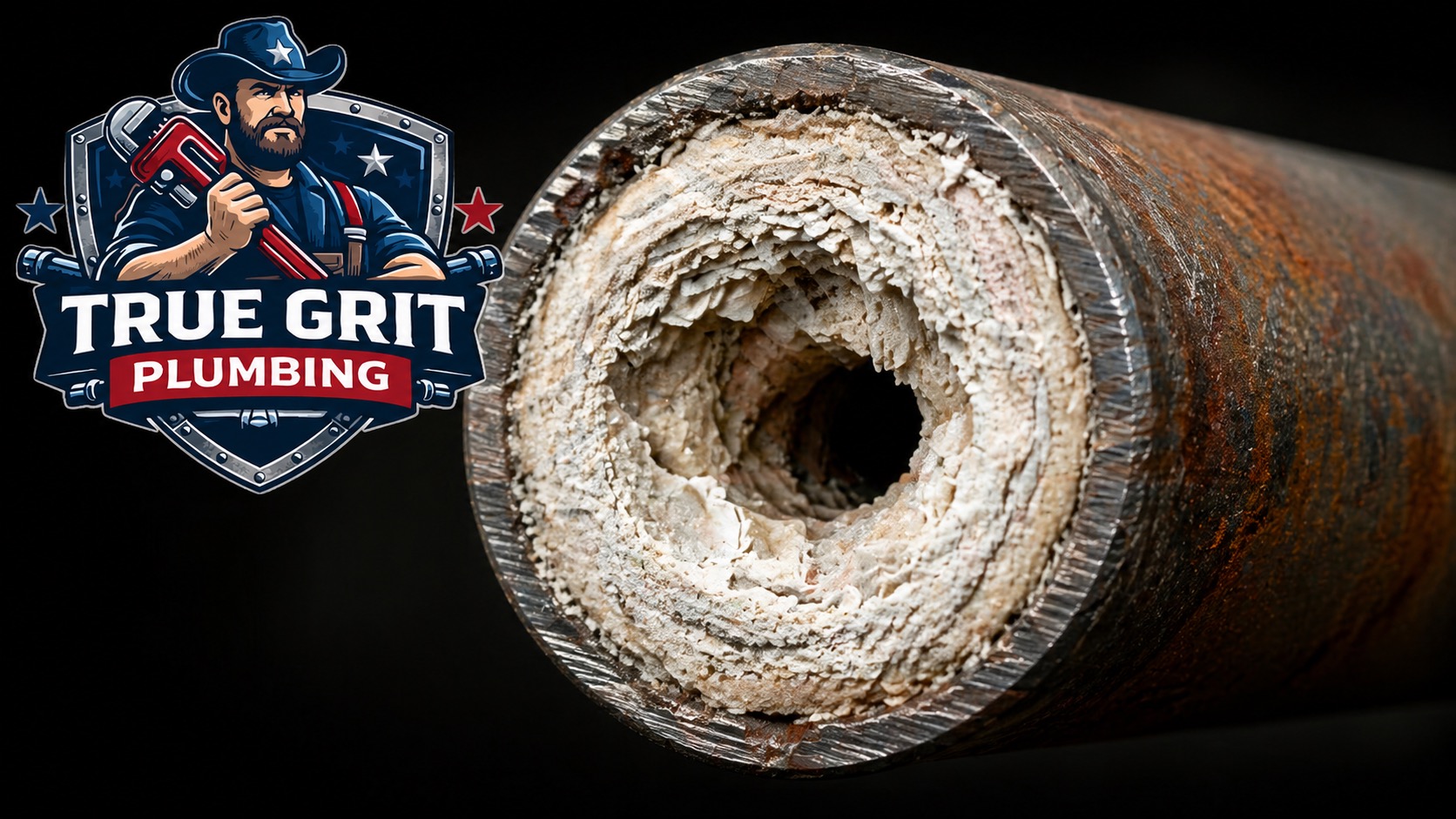
Mineral scale buildup inside a residential water supply pipe — a direct result of hard water.
Bartow and Cherokee counties have some of the hardest water in the Atlanta metro area. "Hard water" means water with a high concentration of dissolved calcium and magnesium minerals. These minerals are harmless to drink, but they are relentless on your plumbing.
Every time hard water flows through your pipes and appliances, it deposits a thin layer of scale on every surface it touches. Over months and years, those layers accumulate. Inside supply pipes, scale narrows the diameter available for water flow — which is why older homes in the area often develop low water pressure that no amount of tweaking seems to fix. Inside water heaters, scale settles on the bottom of the tank and bakes onto the heating element, forcing the unit to work harder and use more energy to heat the same amount of water.
The symptoms of hard water buildup are easy to spot once you know what to look for:
- White or chalky deposits around faucet aerators, showerheads, and drain rings
- Water heater that takes longer to recover or runs out of hot water faster than it used to
- Gradually declining water pressure throughout the house with no obvious cause
- Appliances like dishwashers and washing machines showing scale damage or reduced efficiency
The fix depends on the severity. For water heaters, an annual flush removes sediment before it hardens into a permanent insulating layer. For fixtures, aerator cleaning or replacement is a simple fix. For homes with severe scale issues throughout the supply lines, a whole-house water softener is worth considering — it pays for itself in extended appliance life and reduced repair frequency.
2. Hard Water's Effect on Fixtures and Water Heaters
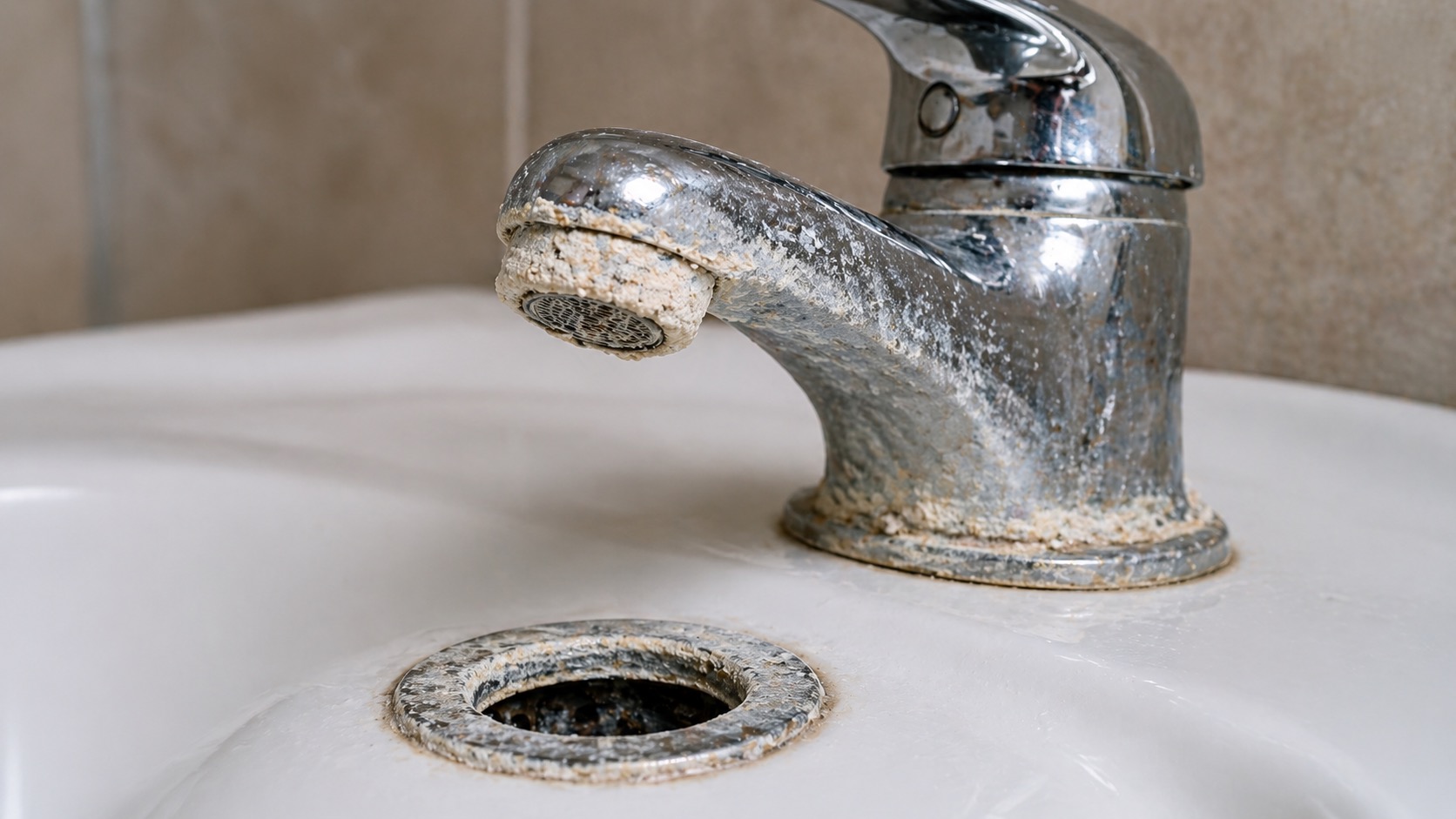
Heavy calcium deposits on a faucet — one of the most visible signs of hard water damage in local homes.
Beyond the pipes themselves, hard water takes a visible toll on the fixtures throughout your home. The white crusty buildup you see around your faucet bases, on showerheads, and around drain rings is calcium carbonate — the same material that forms stalactites in caves, just on a faster timeline.
More importantly, hard water dramatically shortens the life of tank water heaters. The national average life expectancy for a gas water heater is 8 to 12 years. In hard water areas like Bartow County, homeowners commonly see failure at the 6 to 8 year mark — sometimes earlier — because the sediment layer on the tank floor acts as an insulator, overworking the burner and accelerating corrosion from the inside out.
The good news: this is almost entirely preventable. An annual water heater flush — included in our Grit Guard Membership — removes that sediment before it hardens and causes permanent damage. It's a service call that can add 3 to 5 years to your unit's life.
3. Tree Root Intrusion into Sewer Lines
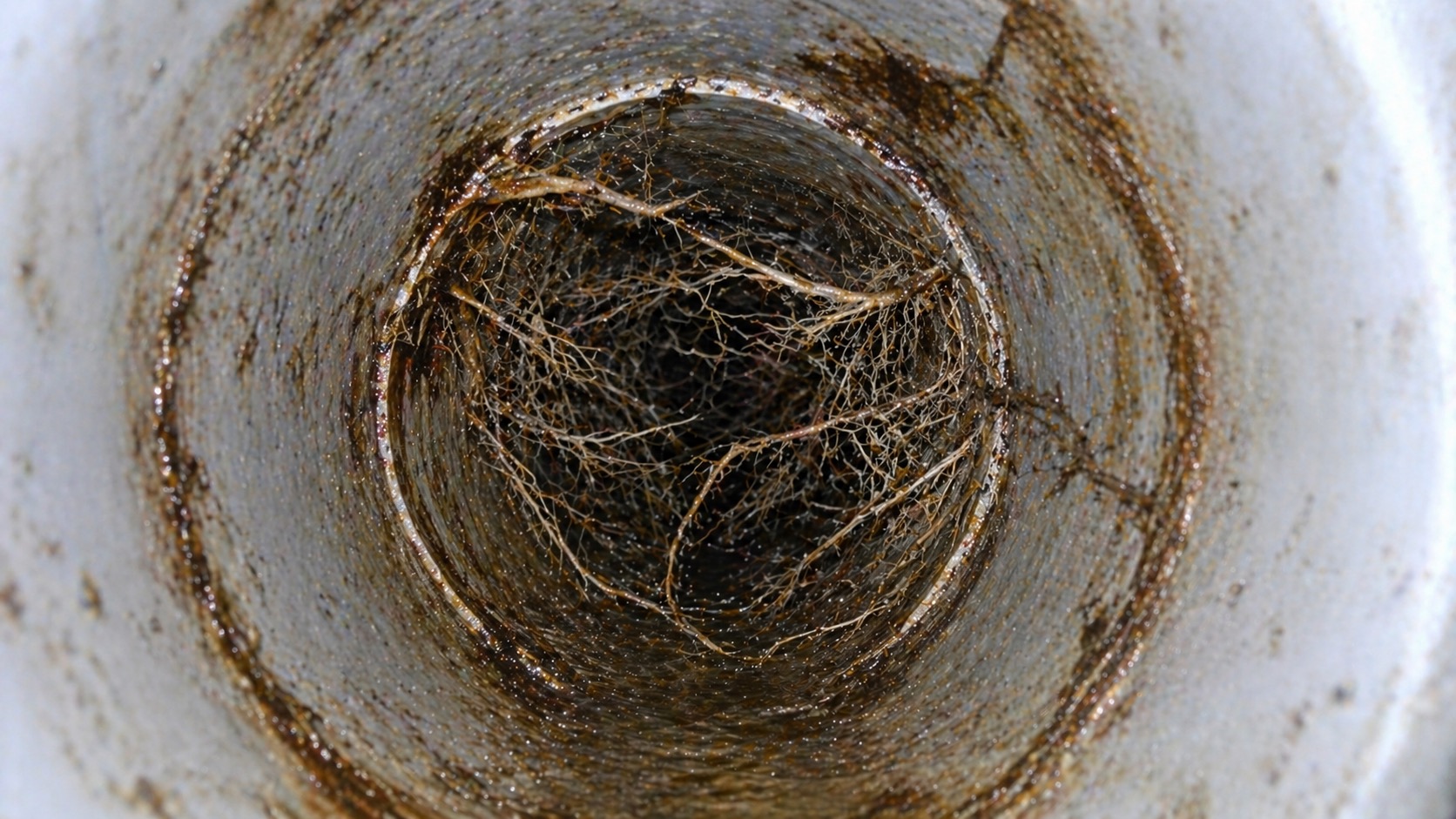
Tree roots filling the interior of a clay sewer line — the most common cause of recurring drain backups in older neighborhoods.
Bartow County has beautiful, mature trees. It also has a lot of older homes — many built in the 1950s, 60s, and 70s — with the original clay or cast iron sewer lines still in the ground. These two facts together create one of the most common and destructive plumbing problems we deal with: tree root intrusion.
Tree roots don't break into sewer pipes by force. They find microscopic cracks or loose joints in aging pipe walls — the kind of tiny gaps that develop naturally over decades of ground movement, temperature changes, and normal settling. Once roots detect the warm moisture escaping from those cracks, they grow toward it. Inside the pipe, they find everything they need to thrive: water, oxygen, and nutrients. What starts as a hairline crack becomes an entry point, and roots that enter a pipe don't stop growing.
Warning signs to watch for in Emerson, Euharlee, and older parts of Cartersville where mature trees are common:
- Multiple drains in different rooms slowing down at the same time
- Toilets gurgling when you run the sink or flush in another bathroom
- Sewage odors in the yard, particularly near where the sewer line runs
- Unusually green or lush patches of grass over the sewer line path
- Recurring clogs that come back within weeks of being cleared
A camera inspection is the only way to know for certain what's happening inside your sewer line. If roots are found early, hydro jetting can clear them without excavation. Catching it early almost always means a less expensive fix.
4. Aging Pipe Materials in Mid-Century Homes
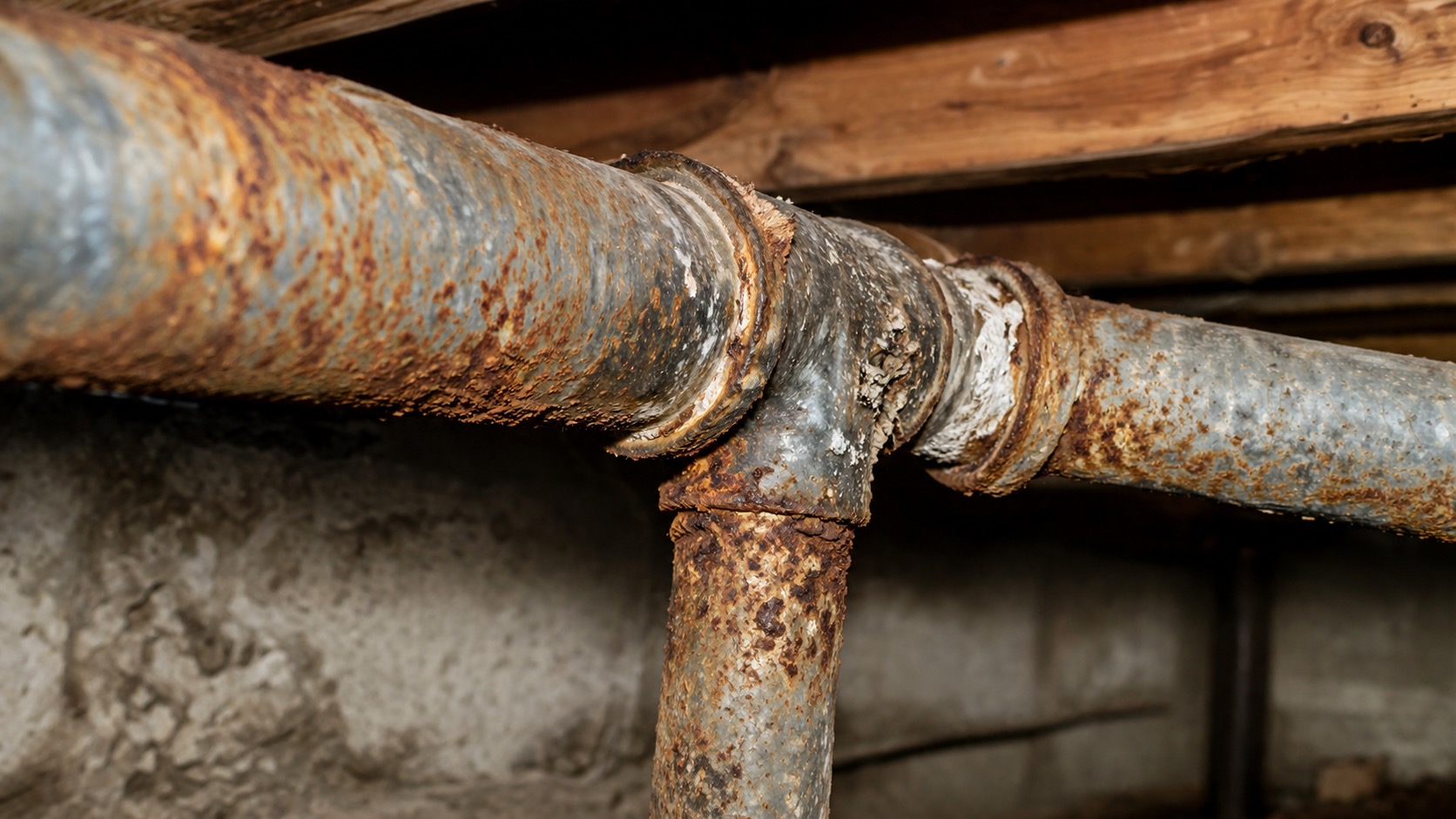
Galvanized steel supply pipes in a mid-century home — corroding from the inside out.
A significant portion of the housing stock in Bartow and Cherokee counties was built between 1940 and 1980. These homes have character, established neighborhoods, and usually larger lots — but many still have their original plumbing materials in the walls and crawl spaces.
Galvanized steel supply pipes were the standard for water supply lines from the 1930s through the 1970s. They were coated with zinc to resist corrosion — but that zinc coating has a lifespan of roughly 40 to 70 years. Once it breaks down, the steel beneath corrodes from the inside out. Homeowners with galvanized pipes often notice rust-colored water when a faucet hasn't been used in a while, and water pressure that gets progressively worse year by year with no obvious leaks.
Cast iron drain lines are similarly aged in homes of this era. Cast iron is durable, but decades of water exposure, temperature cycling, and household waste chemistry causes it to corrode, crack, and in some cases partially collapse. Slow drains throughout the house, recurring clogs, and sewer odors inside the home are common indicators.
Neither material is an immediate emergency — but both are on borrowed time in homes built 50-plus years ago. A visual inspection of exposed pipes in your crawl space or basement, combined with a camera inspection of the drain lines, gives you an honest picture of what's there and how much runway you have before problems start.
What to Do If Any of This Sounds Familiar
The common thread across all four of these issues is that they're slow-moving. Hard water doesn't destroy your water heater overnight. Tree roots don't back up your sewer line on the first day they enter. Galvanized pipes don't fail all at once. They give you time — but only if you use it.
The homeowners who avoid expensive plumbing emergencies aren't the ones with newer homes or luck. They're the ones who get ahead of these problems with regular maintenance and honest inspections before something fails.
True Grit Plumbing serves Cartersville, Emerson, Euharlee, Canton, Acworth, Kennesaw, Marietta, and Woodstock. We're locally based, which means we know exactly what the homes and water supply in this area look like — and we show up with upfront flat-rate pricing before any work begins.
Not sure what's going on with your plumbing?
Call us at 770-847-GRIT or book online. We'll give you a straight answer and an upfront price — no runaround.
BOOK A SERVICE CALL