
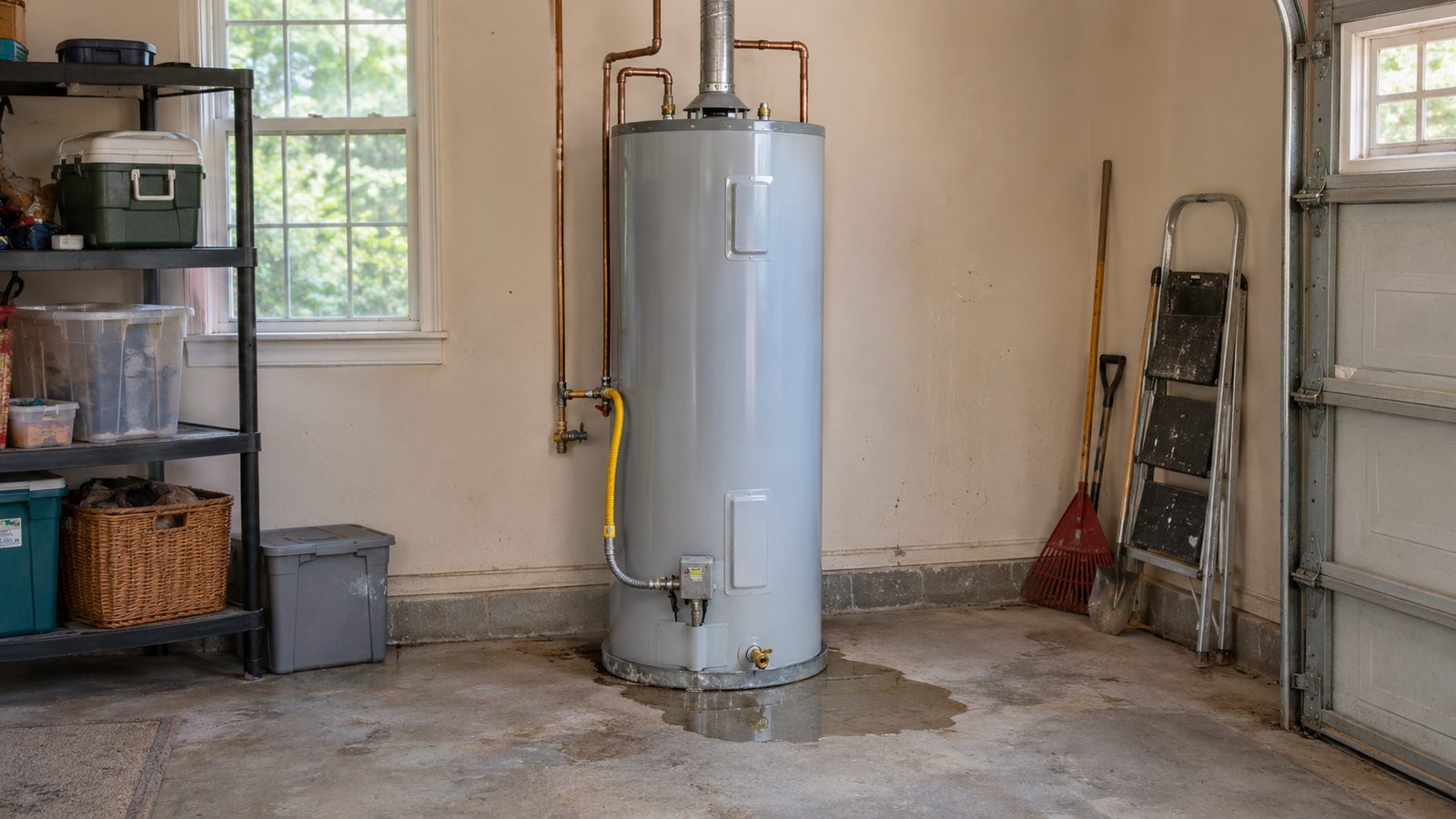
Water Heater Leaking From the Bottom? What to Check and When to Call a Plumber
Water on the floor under a water heater is worrying, but where that water comes from matters. It might be a drain valve, a relief valve doing its job, or condensation. Or the tank itself may be failing.
Water at the bottom of a tank water heater doesn’t always mean the tank is done. First rule out the drain valve, the relief valve discharge pipe, water running down from fittings on top, and condensation. If water is seeping out of the tank body itself, the tank can’t be patched. It needs to be replaced.
First, make it safe
- If you smell gas, leave the house right away. Don’t flip switches, use the phone, or try to light anything on the way out. Call your gas company or 911 from outside.
- Electric heater: turn off its breaker only if you can reach the panel from a dry spot and you aren’t standing in water. If water is near the heater’s wiring or the panel, stay away and get help. Don’t turn the power back on until a plumber confirms the tank is full of water.
- Gas heater: turn the gas control knob to “Off,” following the label on the tank. “Vacation” still keeps the water warm, so it isn’t the same as off.
- Shut off the cold water supply to the heater, if you can reach the valve without touching hot pipes or standing in water.
- Leave the relief valve and its pipe alone. Never plug, cap, or remove the temperature and pressure (T&P) relief valve or its discharge pipe. It’s the safety device that keeps the tank from building dangerous pressure.
Once the power or gas is off and nothing is hot or energized, you can look for where the water is coming from. If there’s standing water near electrical parts, or the water or pipes are hot, don’t mop up or inspect the heater yourself. Call a plumber.
Where the water is really coming from
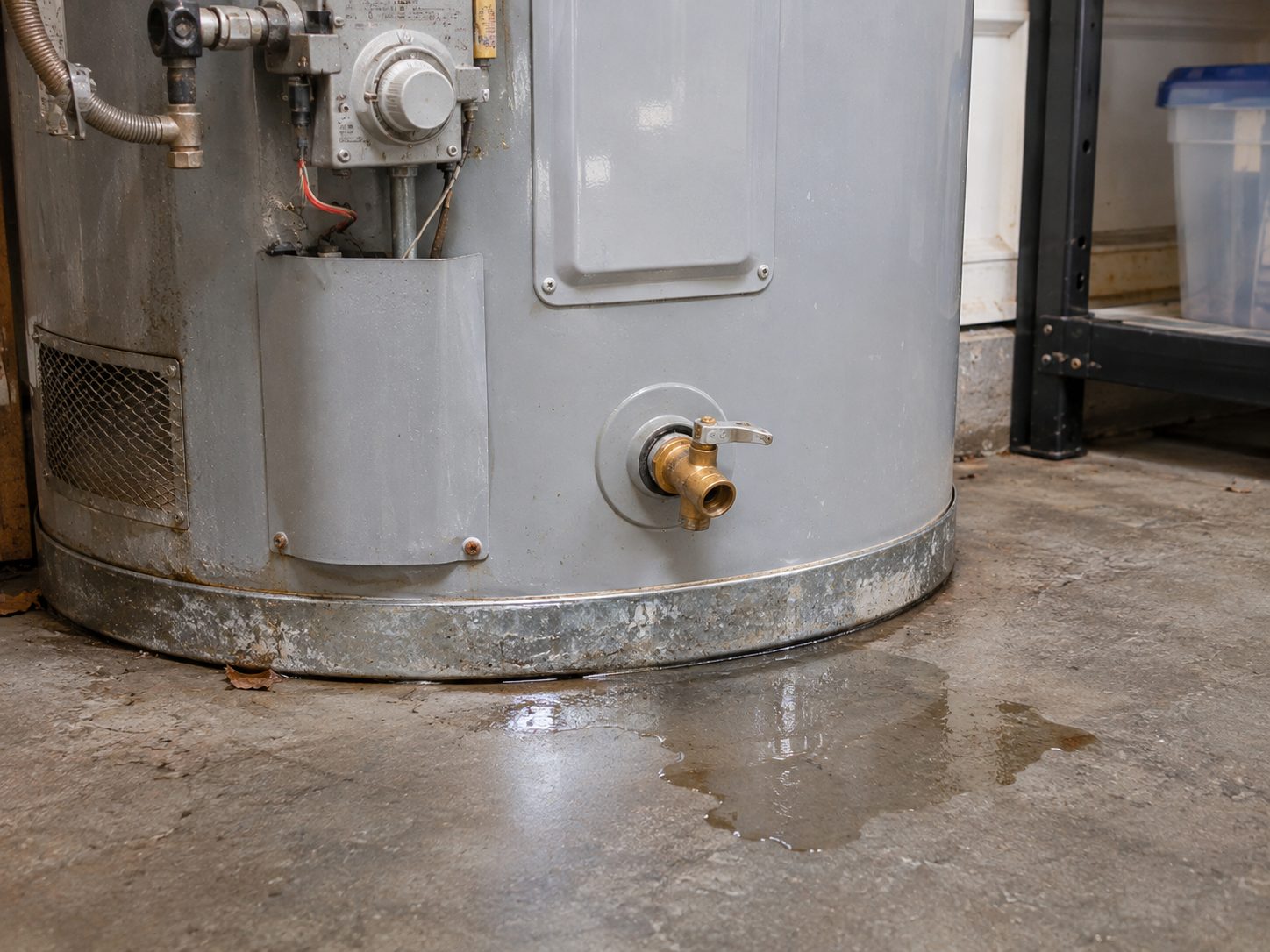
The drain valve
The drain valve sits near the bottom of the tank. If water is dripping from the valve or its outlet, check that it’s closed. If it still drips after that, the valve needs replacing. That’s a repair, not a new heater.
The T&P relief valve discharge pipe
The relief valve sits near the top or on the side of the tank. Its discharge pipe runs down toward the floor, so water from it looks like a bottom leak. When it drips, it’s often reacting to high pressure, thermal expansion, or water that’s too hot. The fix is finding that cause. Sometimes that means an expansion tank or a pressure reducing valve, and sometimes the relief valve itself needs replacing. Don’t block it.
Fittings on top
A slow drip from a loose or corroded connection on top can run down the side of the tank, under the jacket, and pool at the base. Look at the top of the heater before you look at the bottom.
Condensation
A gas heater can sweat when a lot of cold water comes in, such as after long showers. A.O. Smith says that should stop once the tank warms back up. If the puddle stays small and dries up, condensation may be all it is.
Electric element gaskets
Electric heaters have heating elements behind access panels on the side of the tank. A worn element gasket can leak and the water can run down to the floor. That’s a repair. The panels hide live wiring, though, so leave them closed and let a plumber open them with the power off.
The tank itself
If the drain valve, relief pipe, fittings, and element panels are dry and water keeps seeping from under the jacket or the base, the inner tank has likely rusted through. A tank leak can’t be repaired. You’ll be shopping for a replacement, and a small seep can get worse.
Repair or replace?
A leaking drain valve, fitting, or element gasket, or a relief valve that’s discharging, is usually a repair. A leaking tank means replacement. Age matters too: if your heater is near the end of its normal life, spending money on parts makes less sense. Our guide on how long a water heater lasts explains how to read the age off the label.
As we explain in our water heater lifespan guide, gas tank water heaters typically last 8–12 years and electric tank heaters about 10–13 years. Water quality and maintenance can shorten or extend that range. Age alone doesn’t mean a heater needs replacing, but it’s worth weighing before paying for a repair on an older unit.
If it does turn out to be the tank, here’s what water heater replacement costs in Georgia.
When to call a plumber
- You can’t tell where the water is coming from.
- Water is coming from the tank body or under the jacket.
- The relief valve keeps discharging.
- The leak is near a gas line, burner, or electrical connection.
- You shut the water off and the leak won’t stop.
If you’re in Cartersville or Bartow County, we can find the source and tell you straight whether it’s a repair or a replacement. See our Cartersville water heater repair page, or book online.
Frequently asked questions
Does a water heater leaking from the bottom need to be replaced?
Not always. The drain valve, the relief valve’s discharge pipe, a fitting on top, or condensation can all put water at the bottom. If the tank itself is leaking, it needs replacing.
Is it safe to keep using a water heater that’s leaking?
Turn off the power or gas and the water supply, but only if you can do it safely, and leave them off until you know the source. A slow leak can get worse and damage floors and walls. If you smell gas, leave the house first and call from outside.
Why is the relief valve pipe dripping?
Often it’s reacting to high water pressure, thermal expansion, or water that’s too hot. The valve itself can also be worn or defective. Have a plumber find out which, and never cap or plug it.
Can a leaking tank be patched?
No. Once the inner tank is leaking, it can’t be reliably repaired, and the heater should be replaced.
Related reading
- Water heater replacement cost in Georgia
- How long a water heater lasts
- Water heater not working? Here’s what to do
- Gas water heater repair: what fails
We’ll find the source before you spend money on a new heater
Georgia Master Plumber Lic. #MP209554 · Fully insured