
True Grit Plumbing — Cost Guide · Northwest Georgia
Sewer Line Replacement Cost in Georgia: What Homeowners Need to Budget in 2026
May 2026
10 min read
Costs & Guides
Bartow · Cherokee · Cobb
$3,800
NW Georgia Avg. Replacement
$185
Per Linear Foot (Open-Cut)
50–100 yrs
Lifespan of Cast Iron / Clay
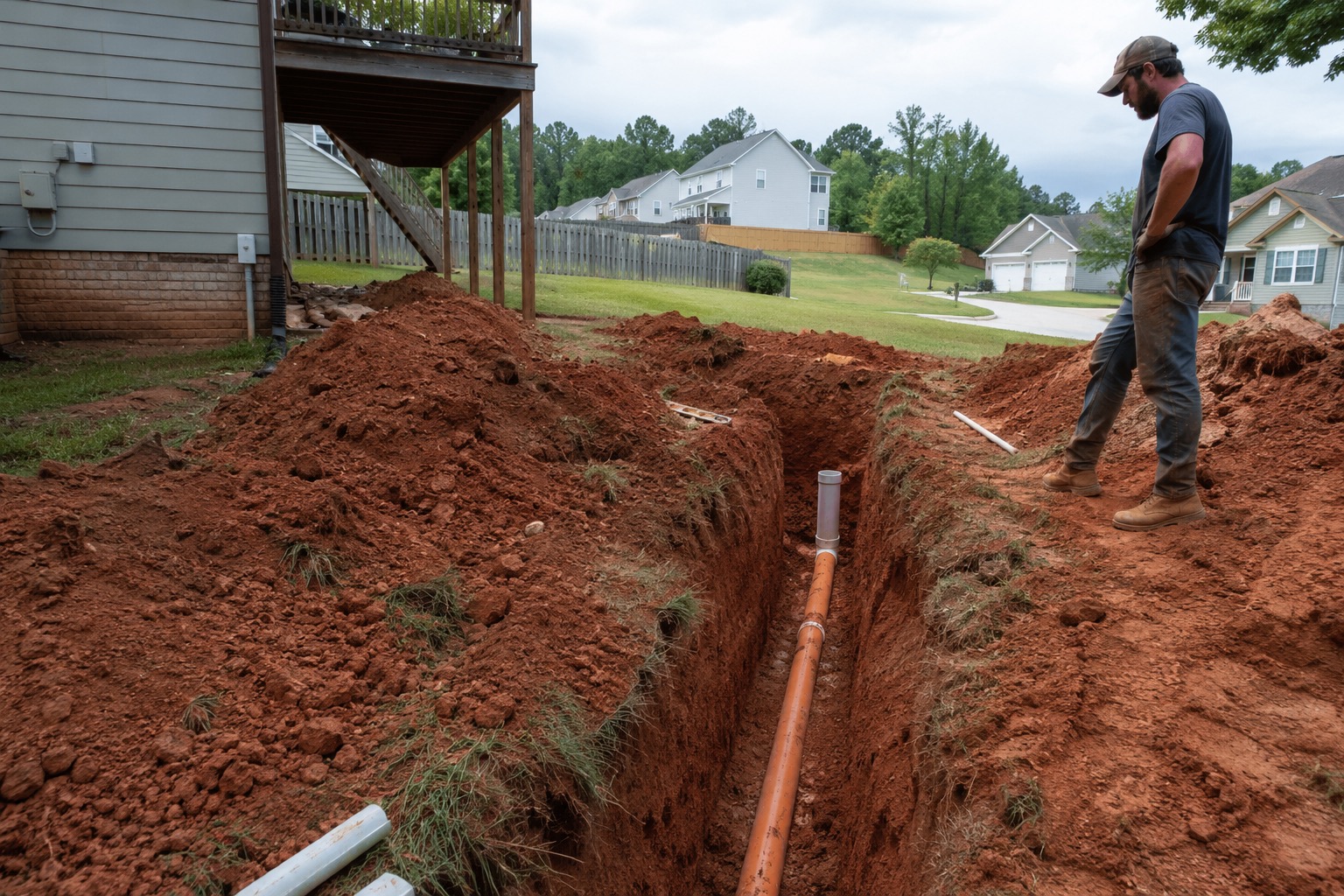
Open-cut sewer line excavation — red Georgia clay soil is a defining factor in NW Georgia replacement costs.
The Short Answer on Cost
Sewer line replacement in Northwest Georgia typically runs $3,000 to $6,500 for a standard residential job — though the range widens fast depending on how deep the pipe sits, how long the run is, and whether you need trenchless or open-cut work. Shorter runs on newer homes in Acworth or Canton can come in under $3,000. Older homes in Cartersville or Emerson with clay pipe buried deep can push past $7,000.
That’s a wide range, and we’ll break down every variable below so you know exactly what’s driving the price on your specific job.
“The biggest mistake homeowners make is assuming the lowest bid is the safest bet. On sewer work, a missed permit or a bad backfill will cost you far more down the road.”
Trenchless vs. Open-Cut: The Biggest Cost Fork
The first question any contractor will ask is whether your line can be replaced trenchlessly. It changes the price significantly — and not always in the direction you’d expect.
| Method | Avg. Cost (NW Georgia) | Best For | Drawback |
|---|---|---|---|
| Open-Cut Excavation | $150–$220 / linear ft | Collapsed or offset pipe, tight budgets | Yard disruption, longer restore time |
| Pipe Bursting (Trenchless) | $200–$280 / linear ft | Intact but deteriorated pipe in good soil | Not viable if pipe has shifted or collapsed |
| CIPP Lining (Trenchless) | $80–$180 / linear ft | Minor cracks, root intrusion, older clay pipe | Reduces pipe diameter slightly |
| Spot Repair | $800–$2,200 flat | Single isolated damage point | Not a fix if damage is widespread |
| Prices based on NW Georgia residential jobs, 2025–2026. Linear footage measured from foundation to street connection. | |||
Most homes in Bartow and Cherokee counties have runs of 40 to 80 linear feet from the house to the municipal connection. That puts a typical open-cut replacement at roughly $6,000–$15,000 fully installed — though many jobs fall well below that once the crew is already on site and conditions are favorable.
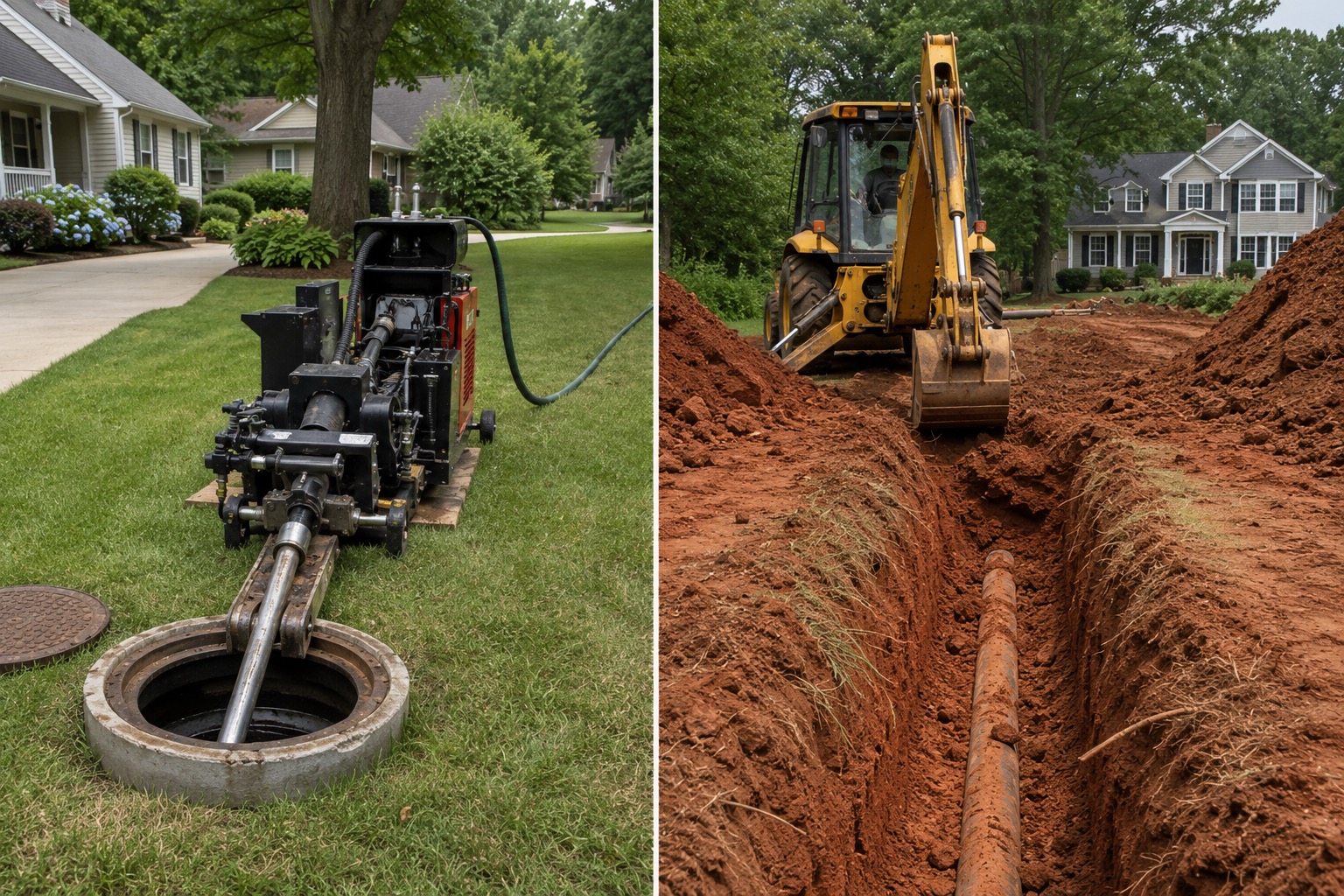
Trenchless methods (left) preserve your yard. Open-cut (right) costs less upfront but requires full excavation.
CIPP lining is often the best value when the pipe structure is intact but deteriorated. It’s essentially a new pipe inside the old one, and it handles root intrusion well — which matters in Cherokee County where mature hardwood roots are a constant issue. Read our full breakdown of sewer line repair vs. replacement to understand when each approach applies.
What Drives Cost Up in Georgia Specifically
Georgia soil conditions, local permit requirements, and the age of residential construction in the area all affect what you’ll actually pay. Here’s what moves the needle:
1. Pipe Depth
The Georgia clay soil in Bartow and Cherokee counties creates a specific challenge — pipes often sit 4 to 6 feet deep to clear the frost line and avoid root zones. Deeper excavation means more labor hours and more backfill material. Every foot of extra depth adds roughly $15–$25 per linear foot to the job.
2. Pipe Material
Homes built before 1970 in the Cartersville and Emerson areas commonly have clay or cast iron sewer lines. Both materials last 50–100 years but fail differently — clay fractures and offsets, cast iron corrodes and collapses internally. Either way, replacement is usually more cost-effective than repair at that age. Homes from the 1970s–1990s may have Orangeburg pipe (tar paper composite) which is the most problematic material — it softens and collapses with almost no warning.
3. Root Intrusion Severity
Heavy root intrusion doesn’t just block the pipe — it can crack it in multiple places, ruling out lining as an option and forcing full replacement. If your drain is chronically slow and you’re in a neighborhood with large oak or pine trees, get a camera inspection before assuming it’s just a clog.
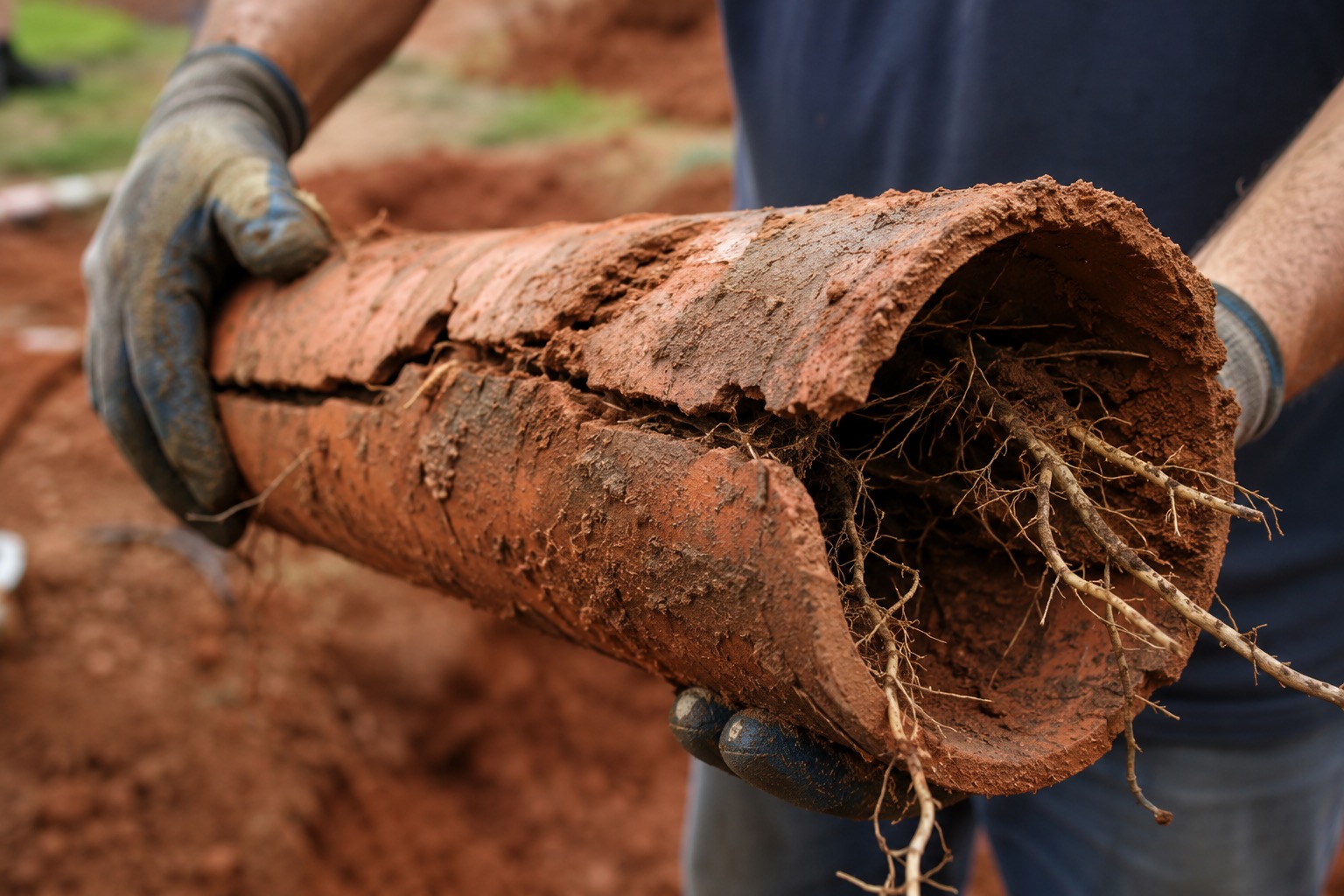
Root-invaded clay pipe pulled from a Cherokee County property. This level of damage rules out lining — full replacement required.
4. Access and Obstacles
A sewer line that runs under a driveway, patio, or mature landscaping adds significantly to the cost. Open-cut work through concrete adds $25–$60 per linear foot for breaking, hauling, and repaving. Trenchless methods eliminate most of this but require the pipe to be in bursting or lining condition.
5. Permits
Bartow County and Cherokee County both require permits for sewer line replacement. Permit fees typically run $150–$400, and any licensed contractor will pull them automatically — if a contractor skips this step, walk away. Unpermitted sewer work creates title issues when you sell and voids homeowner’s insurance on related water damage claims.
Full Cost Breakdown by Scenario
| Scenario | Est. Total Cost | Notes |
|---|---|---|
| Spot repair, single crack | $800 – $2,200 | Camera inspection required first |
| CIPP lining, 40–60 ft run | $3,200 – $7,500 | Best for intact-but-deteriorated clay pipe |
| Open-cut replacement, 40 ft | $4,500 – $7,000 | Standard single-family home |
| Open-cut replacement, 80 ft | $8,000 – $14,000 | Longer runs, deeper soil, or obstacles |
| Pipe bursting, 50 ft | $7,500 – $11,000 | Higher upfront, minimal yard disruption |
| Full replacement + driveway repair | $10,000 – $18,000 | Concrete breaking and repour included |
| Estimates for Northwest Georgia residential properties. Actual quotes vary by site conditions. | ||
Signs You Need Replacement — Not Just a Cleaning
A lot of homeowners call for a drain cleaning when what they actually need is a camera inspection. Drain cleaning clears a blockage — it doesn’t fix a collapsing or offset pipe. Here are the signs that point toward structural failure rather than a simple clog:
- Multiple drains backing up simultaneously — a single clog affects one fixture; a main line failure affects all of them
- Sewage smell in the yard or wet patches of grass over the sewer line path — active leak underground
- Recurring clogs in the same line within 6–12 months despite professional cleaning
- Gurgling toilets when running the washing machine or dishwasher
- Rodent activity near the foundation — rats enter structures through cracked sewer lines
- A camera inspection showing root intrusion with intact pipe walls — CIPP lining is likely sufficient
- Single offset joint with no other damage — spot repair may be all you need
- Clay or cast iron pipe over 40 years old showing minor cracks — proactive lining before full failure saves significant cost
If you’re seeing two or more of the red flags above, the money you spend on another cleaning is money toward a problem that won’t go away. A camera inspection costs $150–$300 and tells you definitively what you’re dealing with.
“A sewer inspection before buying a home in Cherokee or Bartow County is non-negotiable. Clay pipe from the 1960s looks fine until it doesn’t — and replacement isn’t covered by most home warranties.”
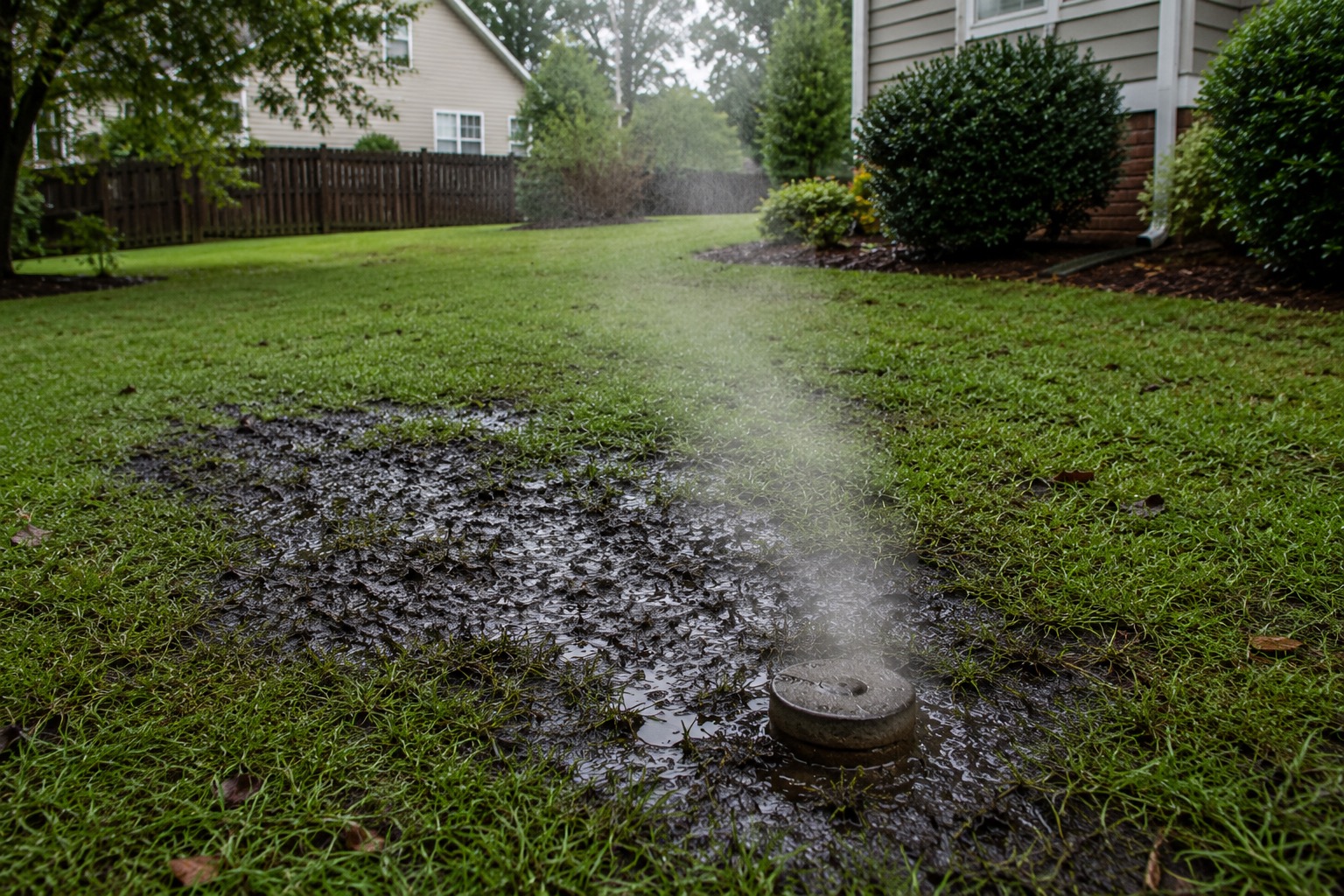
Soggy patches of grass over the sewer line path are a clear sign of an active underground leak — don’t ignore them.
Repair vs. Replace: How to Decide
The general rule is this: if more than 25–30% of the pipe’s length shows damage, replacement is almost always more cost-effective than multiple spot repairs. Spot repairs on a failing clay line are like patching a tire that’s 40 years old — the next failure is just waiting to happen somewhere else on the same run.
That said, replacement isn’t always necessary. A single offset joint, a contained root intrusion, or a small crack in an otherwise sound pipe may be fully addressable with a spot repair or CIPP lining at a fraction of the replacement cost. The camera inspection is what tells you which situation you’re actually in.
For context on how plumbing costs stack up across different repairs, see our guide to water heater replacement costs in Georgia — the decision framework is similar.
Frequently Asked Questions
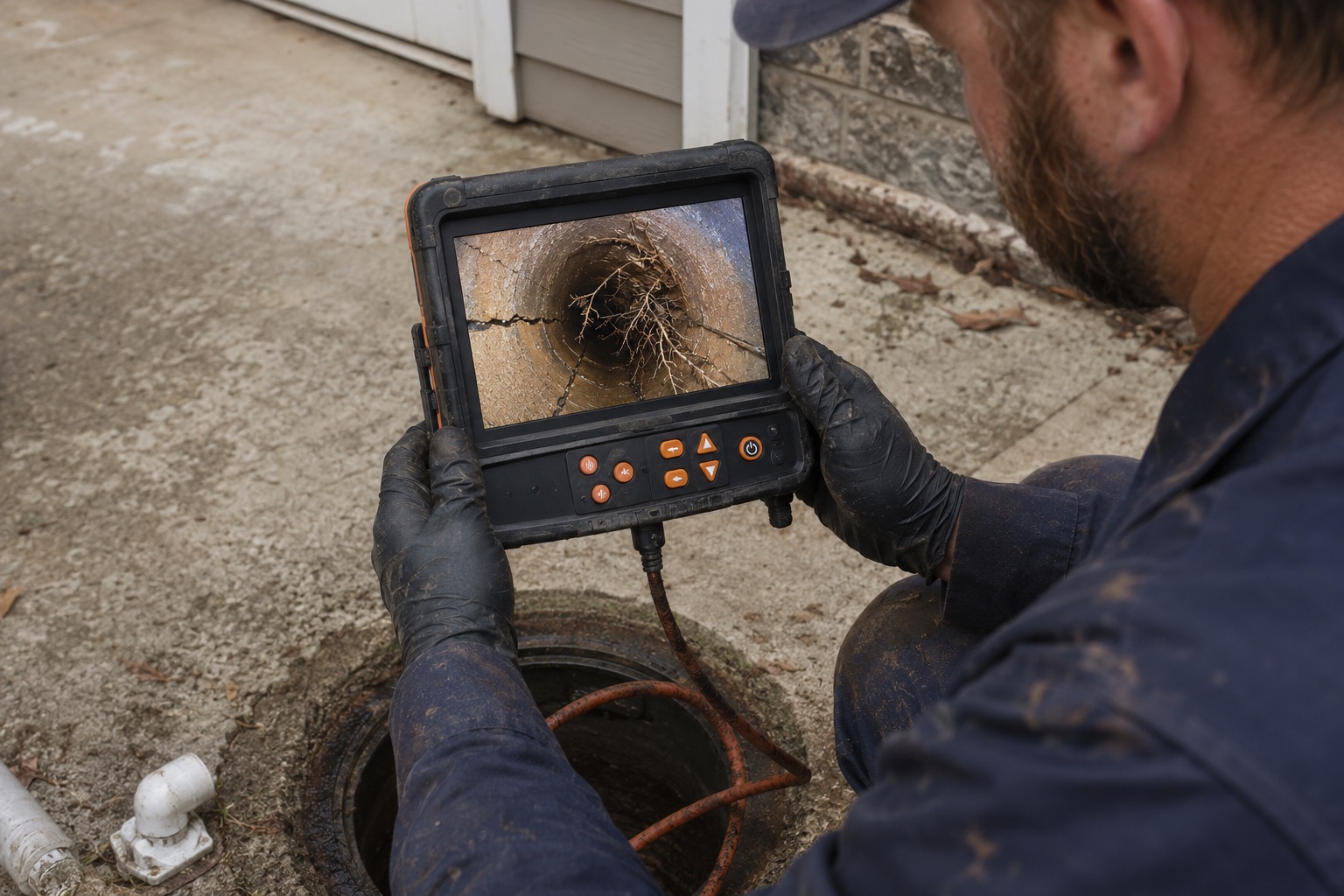
A sewer camera inspection ($150–$300) is the only reliable way to know whether you need a repair, lining, or full replacement.
Does homeowner’s insurance cover sewer line replacement?
Standard homeowner’s insurance typically does not cover sewer line replacement due to age, root intrusion, or normal deterioration. Some policies cover sudden and accidental damage — like a line crushed by a fallen tree. Separate sewer line insurance riders are available through most major carriers for $5–$15/month and are worth considering for homes over 30 years old. Always check your specific policy before assuming coverage.
How long does sewer line replacement take?
A typical open-cut replacement on a 40–60 ft residential run takes 1–2 days for excavation, pipe installation, and backfill. Add 1–2 days for any concrete or paving work. Trenchless methods (pipe bursting or CIPP lining) are usually completed in a single day. You will be without sewer service during the active work — generally 6–12 hours.
What pipe material will be used for replacement?
PVC (Schedule 40 or SDR-35) is the standard material for residential sewer replacement in Northwest Georgia. It’s durable, smooth-walled (resists root intrusion), and carries a long service life when properly installed. Some contractors use ABS — both are acceptable. Avoid any contractor proposing Orangeburg or unreinforced fiber pipe; those materials are no longer code-compliant.
Do I need to be home during the work?
You don’t need to be present for the entire job, but you should be available at the start for a walkthrough and at the end for the final inspection. We’ll need access to the cleanout and the interior for a camera run after the work is complete. You will need to avoid using any water or toilets while the line is open.
What’s the difference between a sewer line repair and a drain cleaning?
Drain cleaning clears a blockage — roots, grease, debris — without addressing any structural damage to the pipe. It’s the right call for a one-time clog in an otherwise sound line. Sewer line repair or replacement addresses physical damage to the pipe itself: cracks, offsets, collapses, or severe deterioration. If your drain clogs keep coming back, a camera inspection will tell you which problem you actually have. See our drain cleaning service page for more detail.
How do I know if my high water bill is related to a sewer issue?
A sewer line leak won’t directly cause a high water bill — sewer lines carry wastewater out, not water in. However, a supply line leak near the sewer path can cause both issues simultaneously. If you’re seeing a spike in your water bill alongside slow drains or sewage smells, get both lines inspected.
Sewer Line Repair
Drain Cleaning
Water Heater Repair
Water Heater Cost Guide
Get a Free Quote
True Grit Plumbing · Serving NW Georgia
Worried About Your Sewer Line? Start With a Camera Inspection.
We serve Bartow, Cherokee, Cobb, Paulding, Floyd, Gordon, and Polk counties. Licensed, local, and available 24/7 for emergencies. No surprise fees — just straight answers.