
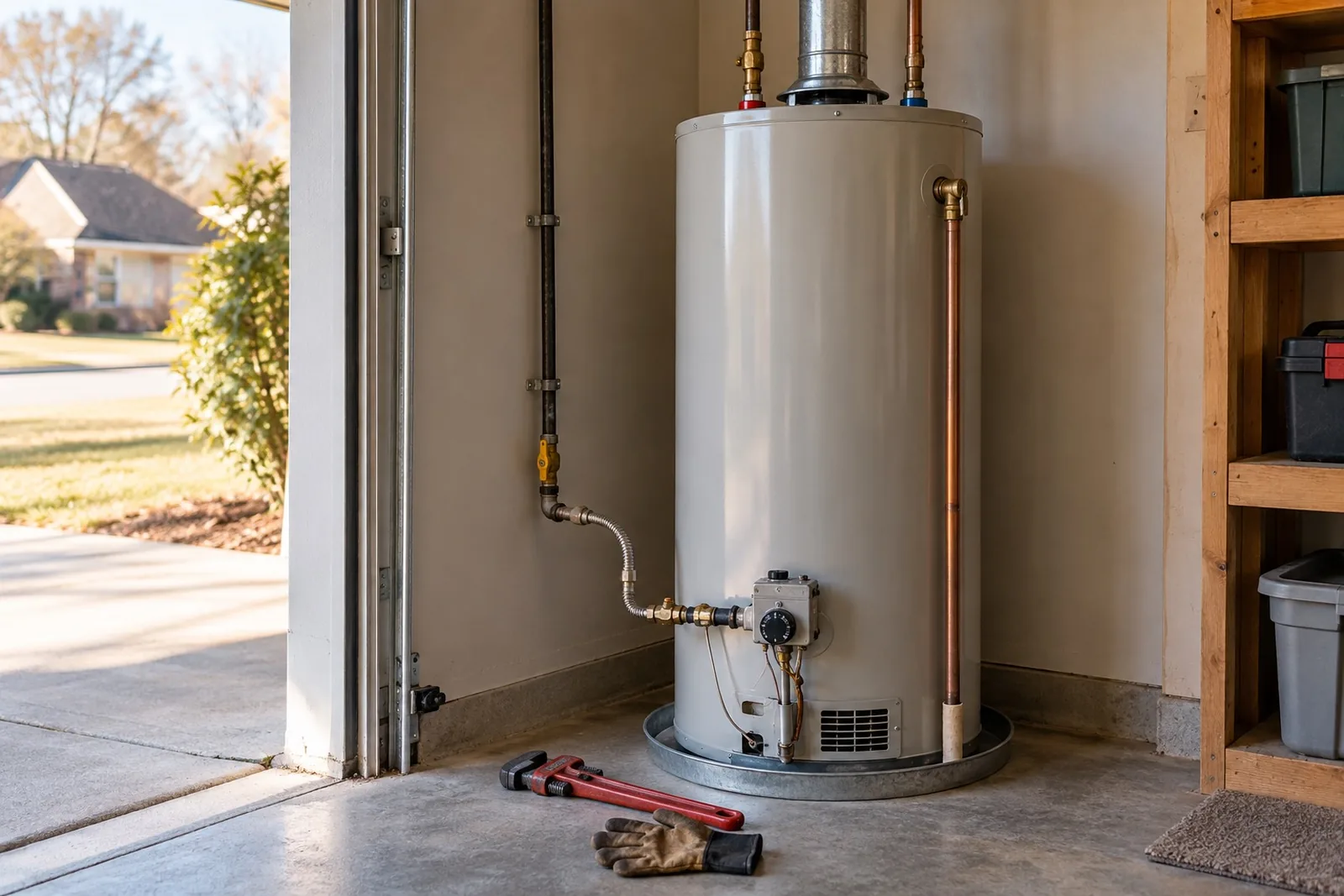
Gas Water Heater Repair: What Fails, and When It’s Worth Fixing
When your gas water heater stops making hot water, the tank itself may still be serviceable. The trouble may be in the parts that light the burner, prove the flame is there, or control the gas.
On the gas tank heaters we see in Northwest Georgia homes, three things fail most often: pilot assemblies, thermocouples, and gas control valves. A failed part does not mean you need a new heater. A thermocouple is usually the cheapest outcome. A gas control valve is the serious one, because the part has to be ordered.
Those parts work together. A problem with one can leave the whole heater sitting cold.
I’ve spent over thirty years in plumbing, including years working for a gas company. A failed part doesn’t automatically mean you need a new heater. The decision depends on what failed, the condition of the tank, and whether you’re willing to wait for a repair part.
The three things that usually fail
The pilot assembly makes the small flame
The pilot is a small flame that lights the main burner when the heater needs to heat water. The pilot assembly delivers gas to that flame through a small opening called an orifice.
That opening needs to deliver a steady flame in the right place. Dirt or a partial blockage can make the flame weak or uneven. A pilot may still be visible without properly heating the thermocouple beside it.
That’s why seeing a flame doesn’t necessarily mean the pilot assembly is working correctly.
The thermocouple proves the flame is there
The thermocouple sits where the pilot flame heats its tip. That heat produces a small electrical signal that tells the gas control it can keep supplying gas.
If the flame goes out, the signal drops away. If the thermocouple fails, the signal can disappear even when there is a flame.
The gas valve then shuts the burner down. That is the safety system working as designed. The shutdown itself doesn’t prove the valve is faulty.
The gas control valve manages the gas
The gas control valve controls gas going to the pilot and main burner. Its temperature control responds to the water temperature, allowing the main burner to operate when heat is needed.
It also works with the flame-proving safety system.
Think of the relationship this way: the pilot supplies the flame, the thermocouple proves it, and the control valve manages the gas. A failure anywhere in that chain can interrupt heating.
When the pilot won’t stay lit
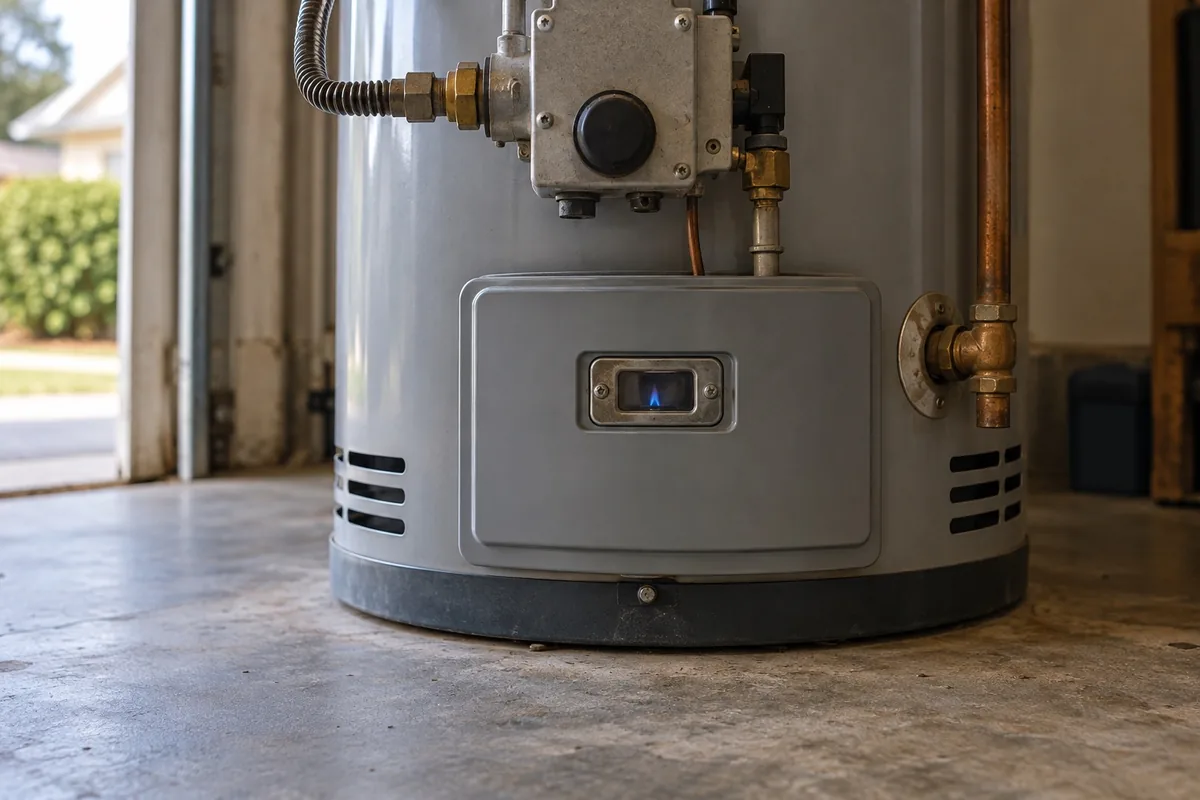
The sight window on the burner door. A steady flame here is what the thermocouple is there to prove.
Several problems can produce the same frustrating result. The clues matter, but none is a diagnosis by itself.
A draft or air movement. Air moving around the heater can disturb the pilot flame. You might notice outages around windy weather or when a nearby door opens. That pattern points toward an airflow issue, although it doesn’t establish where the air is coming from.
A dirty or partly blocked pilot orifice. The small opening supplying the pilot can become restricted. Through the viewing window, the flame may look unusually small, uneven, or poorly directed. It may not heat the thermocouple properly. The homeowner’s complaint is often that the pilot won’t remain lit.
A weak or corroded thermocouple. The flame may appear present, but the thermocouple no longer produces a dependable signal. You may have noticed the pilot dying as soon as the lighting control was released during an earlier lighting attempt. Intermittent shutdowns are another possible symptom.
Repeated heating and cooling, oxidation, and corrosion can take their toll on a thermocouple. Deposits can also affect how its tip receives heat. It’s a small component doing a continuous job beside a flame.
When the thermocouple alone has failed and is separately replaceable, that is generally the cheapest of these three repair outcomes. Replacing a complete pilot assembly involves more than replacing that individual component.
A venting problem. The vent carries combustion gases away from the heater. Poor draft or air coming back down the vent can disturb combustion and put the pilot out. You might notice repeated outages associated with wind or household exhaust fans. Sometimes there is no obvious pattern. A venting fault needs correction; replacing a thermocouple won’t resolve it.
A failing gas control valve. A control that cannot reliably maintain gas flow may also leave you with a pilot that won’t hold. To you, it can look much like a thermocouple problem. That overlap is why identifying the failed component matters.
When there’s no hot water at all
The main burner heats the tank from below. The pilot flame alone doesn’t do that job.
If the pilot is out, the main burner cannot light normally. If the thermocouple isn’t proving the flame, the control shuts down gas flow. If the control valve fails, the burner may not receive gas when the water needs heating.
In each case, the stored hot water eventually runs out and you’re left with cold water at the tap.
A pilot that is visible while the main burner stays off is a different clue from a heater with no pilot flame. It narrows the investigation, but it doesn’t identify a failed valve on its own.
Sediment creates another kind of trouble. Where the water is hard, dissolved minerals can collect at the bottom of the tank. That layer sits between the burner’s heat and the water being heated.
Heat has a harder time passing through the buildup. You may notice slower recovery or rumbling and popping as water heats beneath the deposits.
Sediment usually belongs in the discussion about poor heating and overall tank condition. It shouldn’t become an automatic explanation for an extinguished pilot. A heater can have sediment buildup and a separate failed ignition or control component.
Worth repairing, or time to replace?
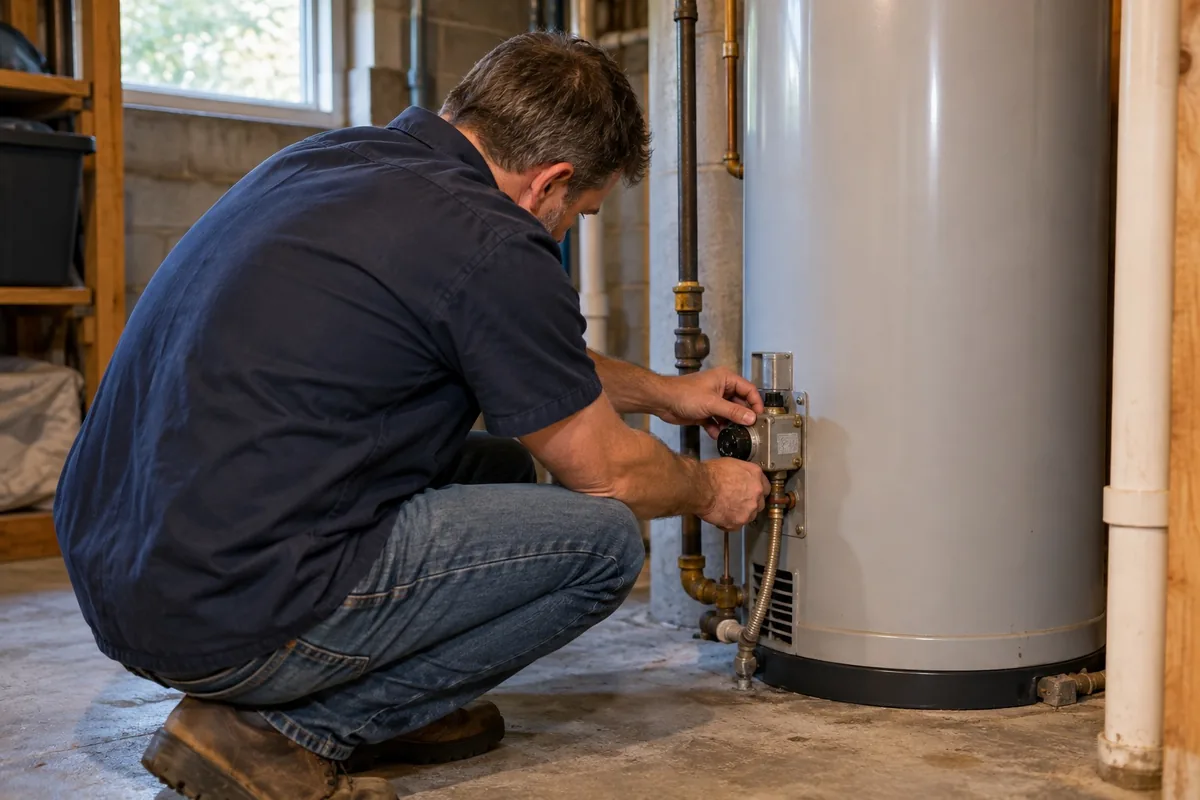
The gas control valve. We do replace them — but the part usually has to be ordered, and that can take several days.
A thermocouple failure on an otherwise serviceable heater is a different decision from a control valve failure on a worn tank with a history of trouble.
Replacing a thermocouple or pilot assembly can make sense when that is the identified fault and the rest of the heater supports repairing it. A failed small component doesn’t make the entire tank unusable.
The gas control valve is the more serious of these repair outcomes because it is a more involved component, and getting the correct replacement can take time.
Yes, we replace gas control valves. But the part usually has to be ordered, and that can take several days to arrive. Plainly put, you’re likely to be without hot water while you wait.
That waiting time belongs in the decision alongside the heater’s age, condition, and repair cost.
You may reasonably choose to wait if the tank is in sound condition and repairing it suits your situation. There’s nothing wrong with that choice.
If the heater has repeated problems, substantial sediment trouble, or a deteriorating tank, putting another component into it becomes a different judgment call.
The source of any leak matters, too. A leaking connection is different from a leaking tank body. Replacing a gas control valve doesn’t repair a tank that is leaking.
Age provides context, but it shouldn’t make the decision by itself. Nor should the inconvenience of waiting be used to push you into replacement.
What it costs to find out
$89 to come out and diagnose the problem. That fee is waived if the repair is done on the same visit.
Pricing is flat rate. The price is agreed in writing before any work starts, never worked out by the hour afterwards. This is the point to confirm the repair included and the warranty that applies.
The diagnosis needs to separate a weak pilot flame, a failed thermocouple, a control problem, and any underlying airflow or venting issue. Otherwise, replacing a part can leave the original cause untouched.
If you ever smell gas
If you smell gas, leave the house first, then contact your gas company. Once you are out and they have been told, call a plumber.
How we handle a gas water heater call
At True Grit Plumbing, we check the pilot and flame-proving components, the gas control, and the heater’s overall condition. A pilot outage needs an explanation, including whether airflow or venting is involved.
If a gas control valve needs ordering, we explain the expected wait.
We have over 30 years in the trade, including years working for a gas company. Our Georgia master plumber license is MP209554, and we’re fully insured.
Frequently asked questions
Why does my gas water heater pilot light keep going out?
A draft, restricted pilot orifice, weak thermocouple, venting problem, or failing gas control valve can cause repeated outages. A small or uneven flame points toward a pilot problem. Outages around wind or exhaust-fan use suggest airflow deserves attention. These are clues, though. Different faults can produce the same symptom.
Can a thermocouple on a water heater be replaced?
Yes. On heaters with a separately replaceable thermocouple, it can be replaced without replacing the tank. On other designs, the repair may involve the pilot assembly. The thermocouple proves the pilot flame is present. If it fails, the gas control shuts down even though the tank itself may still be serviceable.
Is it worth replacing the gas control valve on a water heater?
It can be. We replace gas control valves, but the part usually needs ordering and can take several days to arrive. You’re likely without hot water during that wait. If the tank is otherwise sound, waiting may suit you. Age, condition, repair history, and the inconvenience all belong in the decision.
How do I know if my gas water heater needs repair or replacement?
A failed pilot component on a sound tank often supports repair. A leaking tank body, deteriorating condition, or repeated problems changes the calculation. Sediment and slow recovery also deserve consideration. With a failed control valve, include the likely wait for the part. The decision should reflect the whole heater, not one failed component.
Related reading
- How much does it cost to service a water heater?
- How long does a water heater last?
- Water heater replacement cost in Georgia
- Water heater repair & replacement
We’ll tell you what failed before you spend a dollar on it
Book Online 770-847-GRITGeorgia Master Plumber Lic. #MP209554 · Fully insured