

Georgia's plumbing rules changed on January 1, 2026 — the biggest update the state has seen in years. If you're planning a remodel, replacing a water heater, or doing any permitted plumbing work, here's the plain-English breakdown of what changed and what it means for your home.
The Georgia Department of Community Affairs (DCA) officially transitioned to the 2024 International Plumbing Code (IPC) with new Georgia-specific amendments. For homeowners in Cartersville, Canton, Acworth, Kennesaw, Marietta, Woodstock, and surrounding NW Georgia communities, these changes affect what fixtures are legal to install, what materials can be used, whether your work will pass inspection — and critically — whether your homeowner's insurance will cover you if something goes wrong.
The Foundation: Georgia Adopted the 2024 IPC
Every few years, Georgia refreshes its building codes to align with updated national engineering standards. As of January 1, 2026, the baseline plumbing code for the entire state is now the 2024 IPC, layered with Georgia-specific amendments that modify or replace certain sections for local conditions.
What this means practically: any permit application submitted after February 1, 2026 must fully comply with the new code. Any renovation, new construction, or major repair involving licensed plumbing work will be inspected against these updated standards — across every county we serve.
Bartow · Cherokee · Cobb · Paulding · Floyd · Gordon · Polk
The Biggest Change: High-Efficiency Fixtures Are Now Mandatory
Georgia has moved from recommending water-efficient fixtures to requiring them on all new installations. This is the update that affects the most homeowners doing renovation work.
| Fixture Type | 2026 Requirement | Program |
|---|---|---|
| Toilets | Dual-flush or high-efficiency — max 1.28 gal/flush | WaterSense |
| Kitchen Faucets | Max flow rate of 2.0 gpm | WaterSense |
| Bathroom Faucets | Must not exceed 1.5 gpm at 60 psi | WaterSense |
The code formally incorporates the EPA WaterSense program. Any fixture installed in new construction after January 1, 2026 must carry the WaterSense label — certified to use at least 20% less water than the previous federal standard while performing just as well.
If you're replacing a toilet, faucet, or showerhead as part of a permitted renovation anywhere in our service area, you can't simply grab whatever's on the shelf. The fixture has to meet the new efficiency specs. We know what qualifies and what doesn't — call us before you buy anything.
The upside: WaterSense fixtures genuinely reduce water bills. Lower flow doesn't mean lower performance — the technology has caught up. Most homeowners are pleasantly surprised by how little they notice the difference.

WaterSense-labeled fixtures are now required on all new plumbing installations under the 2026 Georgia code.
No More Reusing Old Plumbing Materials
This one catches DIYers and remodelers off guard. The 2026 Georgia code (Section 300.7) now explicitly prohibits reusing plumbing materials, equipment, and devices — full stop.
The narrow exception: a material can be reused only if it has been professionally reconditioned, tested, and approved by a code official. In practice, salvaging old copper pipe from a demolished wall and reinstalling it elsewhere is no longer allowed.
Lead contamination, hidden corrosion, and pipe failures in older homes are exactly the problems this rule addresses. NW Georgia has a mix of older housing stock — some homes in Cartersville and Acworth date back decades — and the risk of reusing materials that look fine but aren't is real. If a contractor offers to "save you money" by reusing old pipe or valves, that's now a code violation — and creates liability for you as the homeowner if something fails later.
Homeowner Maintenance: Now Explicitly Your Responsibility
Section 300.6 of the updated code reinforces what was always true but is now codified: you, as the property owner, are responsible for maintaining your plumbing system in safe and sanitary condition. Code officials now have explicit authority to require a re-inspection of any plumbing system to verify compliance.
This matters for two key reasons:
- If deferred maintenance leads to a failure, you carry the legal and financial weight of it.
- Insurance claims tied to unpermitted or non-code-compliant work are routinely denied by carriers.
The practical takeaway: routine maintenance — water heater flushes, drain cleaning, leak inspections — isn't optional anymore. It's your responsibility as a homeowner, and it's now backed explicitly by state code.
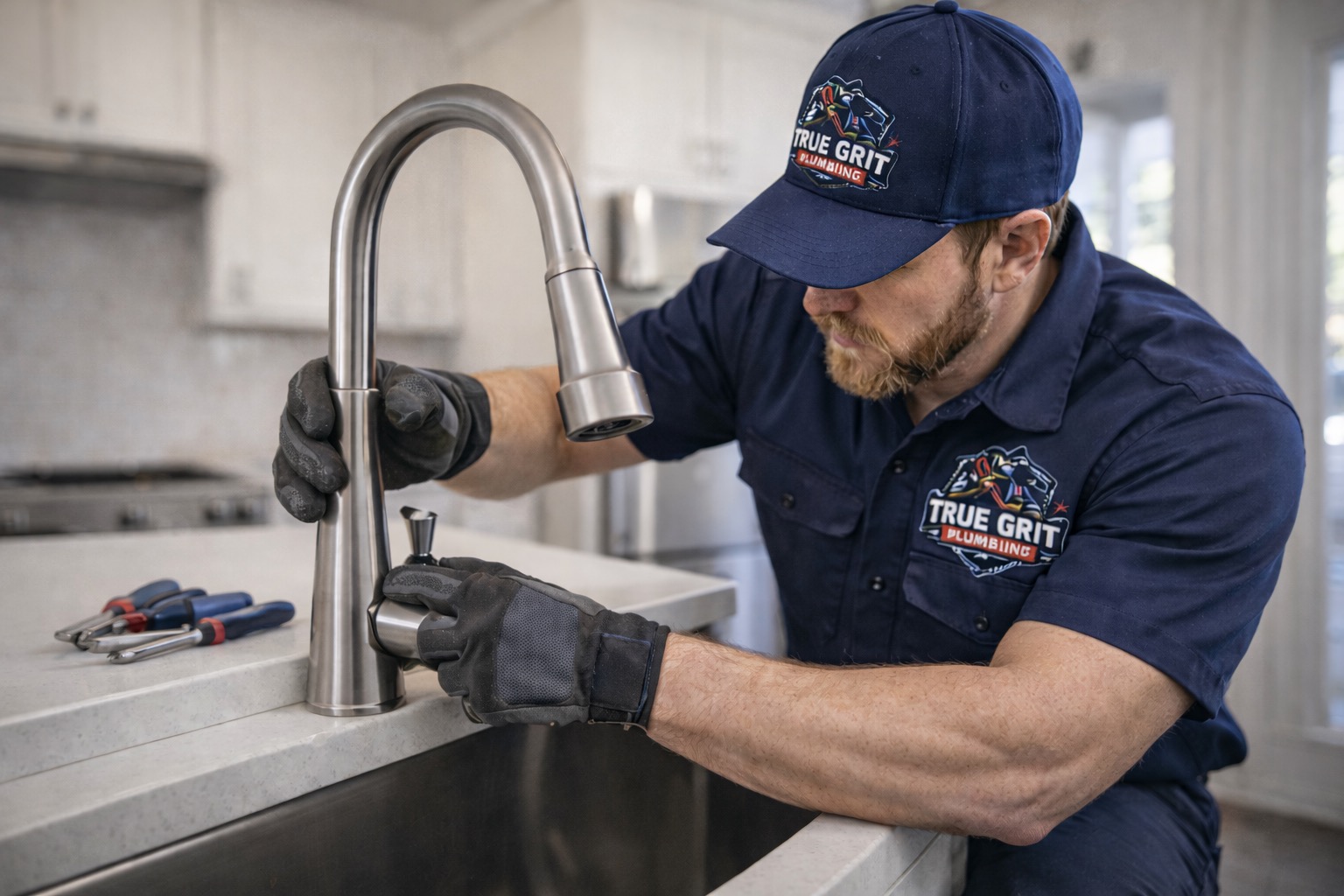
Permitted, code-compliant work protects homeowners from insurance voids, failed inspections, and personal liability.
Permits Matter More Than Ever
Unpermitted plumbing work has always been a problem, but the 2026 code update raises the stakes considerably. Here's what happens when work is done without a permit:
- Failed inspections at closing — leading to costly corrections right when you're trying to sell your home
- Voided insurance coverage — if a water damage claim is tied to unpermitted work, your insurer can and will deny it
- Personal liability — no licensed contractor's insurance covers unpermitted work, so the damage falls on you
At True Grit Plumbing, we pull permits on work that requires them. Every time. That's not us being difficult — that's us protecting you.
What NW Georgia Homeowners Should Do Right Now
You don't need to panic or replace every fixture in your house. The 2026 code primarily applies to new construction and permitted renovation work. But a few practical steps are worth taking now:
Call us before you buy fixtures. We'll tell you exactly what meets 2026 specs so you don't waste money on something that won't pass inspection.
Consider a plumbing inspection. We'll assess your pipes, fixtures, and water heater and give you a straight picture of what's aging out.
It may be worth verifying that work was permitted. Finding out at closing is a much worse time to discover it wasn't.
We stock WaterSense-certified products and handle the permit. One call, done right, no surprises at inspection.
Frequently Asked Questions
The 2024 International Plumbing Code (IPC) with 2026 Georgia State Amendments took effect on January 1, 2026. Any permit submitted after February 1, 2026 must fully comply with the new code.
New installations must meet EPA WaterSense efficiency standards. Toilets must be dual-flush or high-efficiency with a maximum of 1.28 gallons per flush. Kitchen faucets are limited to 2.0 gpm. Bathroom faucets must not exceed 1.5 gpm at 60 psi.
No. Section 300.7 prohibits reusing plumbing materials, equipment, and devices unless they've been professionally reconditioned, tested, and approved by a code official. Salvaging old pipe and reinstalling it is no longer allowed.
Unpermitted work can result in failed inspections when selling your home, voided homeowner insurance coverage for water damage claims, and personal liability for any resulting damage since no licensed contractor's insurance covers unpermitted work.
The 2026 code primarily applies to new construction and permitted renovation work. Existing plumbing that's not being altered doesn't need to be immediately upgraded. However, Section 300.6 does reinforce that property owners are responsible for maintaining their plumbing systems in safe and sanitary condition.
The True Grit Guarantee
We stay current on every code cycle — not because we have to, but because doing the job right the first time is the whole point. When True Grit Plumbing does work at your home, it's done to the 2026 Georgia code, properly permitted, and built to last.
No-Nonsense Plumbing Done Right